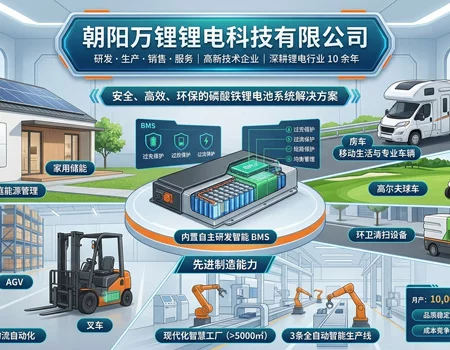
The new round of algorithm optimization covers overcharge, over-discharge, overcurrent, temperature monitoring, and balancing control strategies, helping battery systems maintain more stable operating conditions under complex working scenarios. Compared with the previous version, the new BMS logic has been further improved in anomaly recognition speed, state determination accuracy, and tiered warning strategies.
Wanli's self-developed BMS supports finer-grained cell voltage sampling, temperature rise detection, and balancing control, and can differentially configure protection thresholds, response times, and recovery logic according to different application scenarios. This configurability enables the system to obtain protection strategies that are better aligned with actual operating conditions in scenarios such as energy storage, industrial power, and mobile devices.
Under continuous operation and high-frequency charge-discharge scenarios, battery systems often face issues such as temperature fluctuations, load changes, and instantaneous current impacts. Through continuous optimization of current limiting, temperature compensation, balance triggering, and anomaly reporting mechanisms, Wanli aims to improve safety margins while reducing the decline in user experience caused by overly conservative protection logic.
At present, this capability has been gradually applied to energy storage systems, AGV power batteries, and battery solutions for sanitation equipment. The company will continue to iterate the BMS platform around areas such as remote diagnostics, operation log analysis, and maintenance early warning, helping customers obtain more stable and more transparent battery management capabilities throughout the full lifecycle of their equipment.