As new energy technologies continue to mature and end-use application markets keep expanding, the replacement of batteries by lithium batteries across multiple segmented fields is clearly accelerating. Especially in scenarios such as industrial vehicles, intelligent warehousing, sanitation equipment, RV travel, and residential energy storage, traditional lead-acid batteries, due to limitations such as low energy density, long charging time, and high maintenance costs, are gradually becoming unable to meet modern equipment’s comprehensive demands for high efficiency, long endurance, and intelligent management. In contrast, lithium battery products represented by lithium iron phosphate are becoming an important direction for market upgrading, thanks to their higher safety and better overall performance.
For a long time, lead-acid batteries have occupied a certain market share in forklifts, cleaning equipment, golf carts, as well as some energy storage and backup power fields due to their relatively low cost and mature application. However, as equipment usage frequency increases and users’ requirements for operational efficiency rise, the shortcomings of lead-acid batteries in practical applications have gradually become apparent.
For example, in high-frequency usage scenarios, lead-acid batteries usually have problems such as slow charging speed, rapid lifespan degradation after deep discharge, the need for frequent maintenance, and heavy weight. These issues not only affect the continuous operating capability of equipment, but also increase the overall cost of use. Especially in scenarios such as warehousing and logistics, factory handling, and outdoor operations where equipment stability is highly required, users’ focus on battery systems has shifted from “usable” to “efficient, stable, low-maintenance, and long-life.”
It is against this backdrop that “lead-to-lithium conversion” has become one of the major trends in current industry development. More and more end customers are beginning to realize that although the initial investment in lithium batteries is relatively higher, their overall value advantage is more prominent when considered comprehensively from dimensions such as service life, maintenance cost, operational efficiency, and energy utilization.
Among the many lithium battery technology routes, lithium iron phosphate batteries have become an important choice for industrial equipment and the energy storage market due to their good thermal stability, high safety performance, and long cycle life.
For industrial vehicles such as AGVs and forklifts, lithium batteries can support faster charging and higher-frequency use, helping reduce downtime waiting and improve equipment turnover efficiency. At the same time, their maintenance-free characteristics also reduce labor maintenance costs, making them more suitable for modern intelligent warehousing and flexible manufacturing scenarios.
In the field of sanitation cleaning equipment, devices usually need to operate continuously for long periods, placing high demands on battery endurance and stable power supply capability. Lithium iron phosphate batteries can maintain good output performance under complex working conditions, while also having stronger environmental adaptability, helping equipment achieve more efficient and reliable daily operations.
In mobile application scenarios such as RVs and golf carts, lightweight design, long lifespan, and high safety are key concerns for users. Compared with traditional lead-acid solutions, lithium batteries can effectively reduce the overall vehicle load, improve endurance performance, and bring users a more convenient experience.
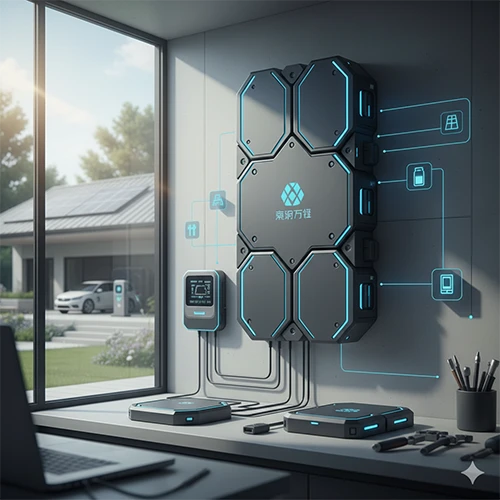
In the field of residential energy storage, users place particular importance on the safety, lifespan, and intelligent management level of battery systems. Due to their high stability and large number of cycles, lithium iron phosphate batteries are increasingly favored by the energy storage market and have become a core component of household energy management systems.
As lithium battery applications continue to deepen, the role of the battery management system (BMS) is becoming increasingly important. It can be said that lithium batteries are not merely a combination of cells, but also a comprehensive embodiment of system integration and intelligent management capabilities.
A mature intelligent BMS can monitor the operating status of a battery pack in real time and implement functions such as overcharge protection, over-discharge protection, overcurrent protection, short-circuit protection, temperature protection, and balancing management, thereby effectively improving the safety, reliability, and service life of the battery system. For battery systems with multiple series and parallel connections, the algorithm capability and management precision of the BMS are directly related to the performance of the entire pack and its long-term stable operation.
As users’ requirements for product quality continue to rise, lithium battery companies with the ability to independently develop and continuously optimize BMS in the future will demonstrate stronger advantages in industry competition.
The lithium battery industry is moving from “scale expansion” to “quality competition.” In this process, manufacturing capability has become an important foundation for whether an enterprise can gain market recognition.
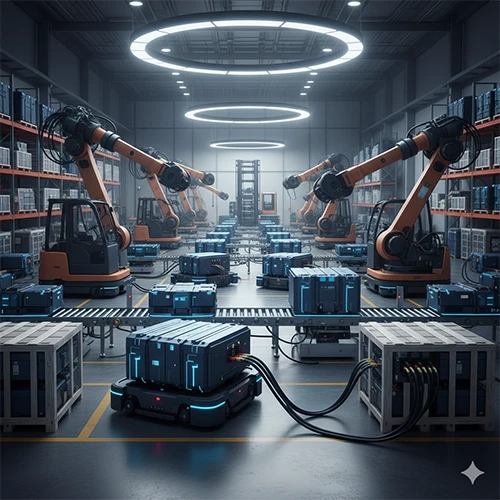
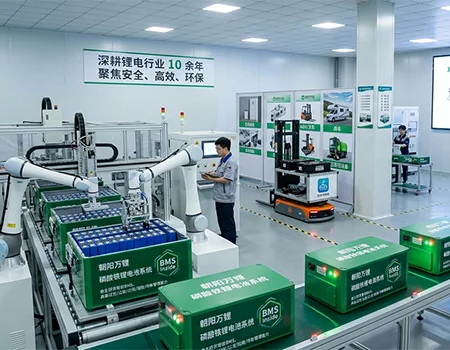
The construction of automated and intelligent production lines not only helps improve production efficiency, but also enables standardized and refined control in multiple stages such as battery assembly, welding, inspection, and aging testing, thereby enhancing product consistency and reliability. For a market with growing demand for mass production and multi-scenario customization, whether an enterprise has stable mass production capability and rapid delivery capability has become an important reference factor for customers when choosing suppliers.
Especially in the fields of industrial equipment and energy storage systems, customers generally have high requirements for delivery schedules, quality, and after-sales response speed. Enterprises with modern factories, automated production lines, and comprehensive quality control systems are better able to maintain stable development amid fierce competition.
At present, the lithium battery industry is at an important stage of continuous application expansion, ongoing product upgrading, and accelerated optimization of market structure. As the concept of green manufacturing continues to advance in depth and the demand for equipment electrification and intelligence keeps increasing, the trend of lithium batteries replacing traditional lead-acid batteries will continue to strengthen.
In the future, industry competition will no longer be merely competition between individual products, but a contest of comprehensive strength centered on technological R&D, system integration, safety management, manufacturing capability, and service level. For enterprises focused on lithium iron phosphate battery system solutions, only by adhering to innovation-driven development, improving quality standards, and deeply cultivating segmented application scenarios can they better seize the market opportunities brought by industrial upgrading.
It can be foreseen that, driven by the continued growth of industrial vehicles, energy storage equipment, and diversified electric applications, the lithium battery industry will continue to maintain a favorable development outlook, and enterprises with specialized, intelligent, and large-scale capabilities will also usher in broader development space in the new round of industry development.