Lithium iron phosphate batteries are ushering in new opportunities across multiple application scenarios, with safety and intelligence becoming key industry development keywords
In recent years, with the rapid development of the new energy industry and the accelerating pace of electrification and intelligent upgrades in end-use devices, the lithium battery industry has maintained sustained growth. Among them, thanks to their high safety, long cycle life, good thermal stability, and relatively high overall cost performance, lithium iron phosphate batteries are rapidly penetrating multiple application fields such as energy storage, industrial vehicles, specialized equipment, and low-speed electric vehicles, becoming an important focus of industry attention.
Against the backdrop of the “dual carbon” goals and green manufacturing, lithium batteries have gradually expanded from the traditional consumer electronics sector into a broader range of industrial and civilian scenarios.
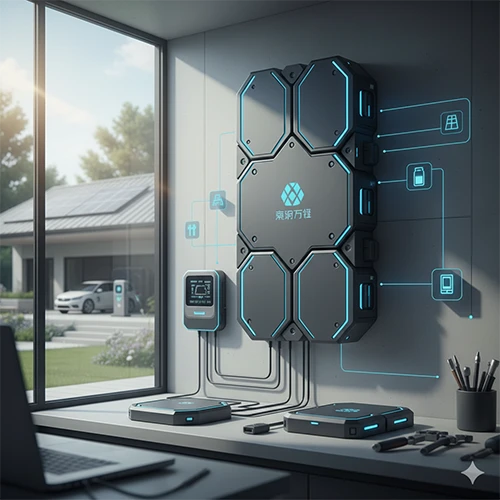
In the field of residential energy storage, as users' demands for energy management efficiency, backup power during outages, and electricity cost optimization continue to rise, lithium iron phosphate battery systems, with their advantages of high safety and long service life, are becoming an important choice for household energy storage configurations.
In the field of industrial logistics equipment such as AGVs and forklifts, equipment operating efficiency, charging and discharging stability, and later-stage maintenance costs have become key concerns for users. Compared with traditional lead-acid batteries, lithium batteries offer clear advantages in being lighter, charging faster, lasting longer, and requiring no maintenance, driving the continued acceleration of the electrification upgrade of industrial vehicles.
At the same time, in niche fields such as RVs, golf carts, and sanitation cleaning equipment, users are placing higher demands on battery system lightweighting, endurance, and environmental adaptability. With their excellent overall performance, lithium battery products are continuously unlocking greater market potential.
As the application range of lithium batteries continues to expand, industry competition is no longer limited to capacity and price; safety is becoming an important prerequisite for companies to win the market.
Especially in scenarios with relatively complex operating environments, such as energy storage systems, industrial vehicles, and outdoor mobile equipment, battery systems not only need stable cell performance, but also rely on mature battery management systems (BMS) for comprehensive protection. At present, intelligent BMS equipped with overcharge protection, over-discharge protection, overcurrent protection, short-circuit protection, temperature monitoring, and balancing management functions have become important technical support for improving the safety and reliability of the entire battery pack system.
From the perspective of industry development trends, lithium battery companies in the future will place greater emphasis on end-to-end safety control capabilities covering material selection, structural design, PACK processes, BMS algorithms, and complete machine validation, so as to meet the requirements for stable operation and long-term use across different application scenarios.
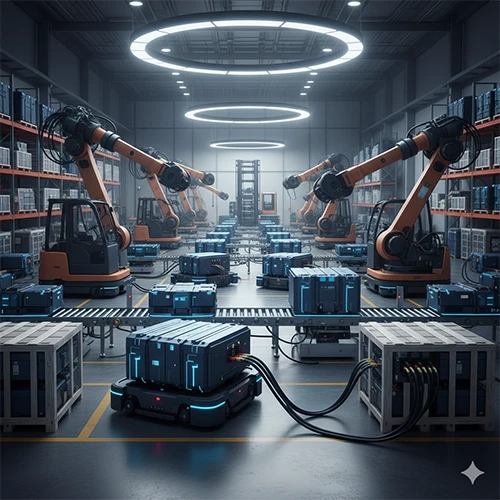
While market demand continues to grow, customers are also raising higher standards for product consistency, delivery efficiency, and customized service capabilities. To adapt to this change, more and more lithium battery companies are accelerating the construction of intelligent manufacturing systems.
The investment in modern smart factories and automated production lines can not only improve battery pack production efficiency, but also enable more refined quality control in key processes such as cell sorting, welding, assembly, inspection, and aging tests, effectively enhancing product consistency and stability. At the same time, with the support of digital management methods, companies can further optimize supply chain coordination, production scheduling, and delivery responsiveness, thereby strengthening their competitive market advantages.
It is foreseeable that companies with R&D and innovation capabilities, automated manufacturing capabilities, and rapid delivery capabilities will occupy a more advantageous position in future industry competition.
Under the global trend of green and low-carbon development, the lithium battery industry is also continuously evolving toward a more environmentally friendly and sustainable direction. Compared with some traditional energy solutions, lithium iron phosphate batteries offer the advantages of lower pollution, higher energy efficiency, and longer service life during use, aligning with the current development philosophy of energy conservation, emission reduction, and the circular economy.
At the same time, as the industrial chain continues to improve, battery recycling, second-life utilization, and green manufacturing processes are gradually becoming key areas of industry focus. In the future, lithium battery companies will need not only to continue making breakthroughs in product performance and safety, but also to take on greater responsibility in energy-efficient production, improved material utilization, and resource recycling.
Overall, the lithium battery industry is at an important stage of transformation from high-speed growth to high-quality development. Safety, intelligence, environmental protection, and efficiency have become several core keywords driving the industry's continuous progress. Especially in the field of lithium iron phosphate batteries, with application scenarios becoming increasingly diverse and market awareness continuing to rise, their development prospects remain broad.
For lithium battery companies, only by adhering to technological innovation, strengthening quality management, improving intelligent manufacturing levels, and continuously optimizing system solutions around customer needs can they seize opportunities in a rapidly changing market environment and achieve long-term, steady development.